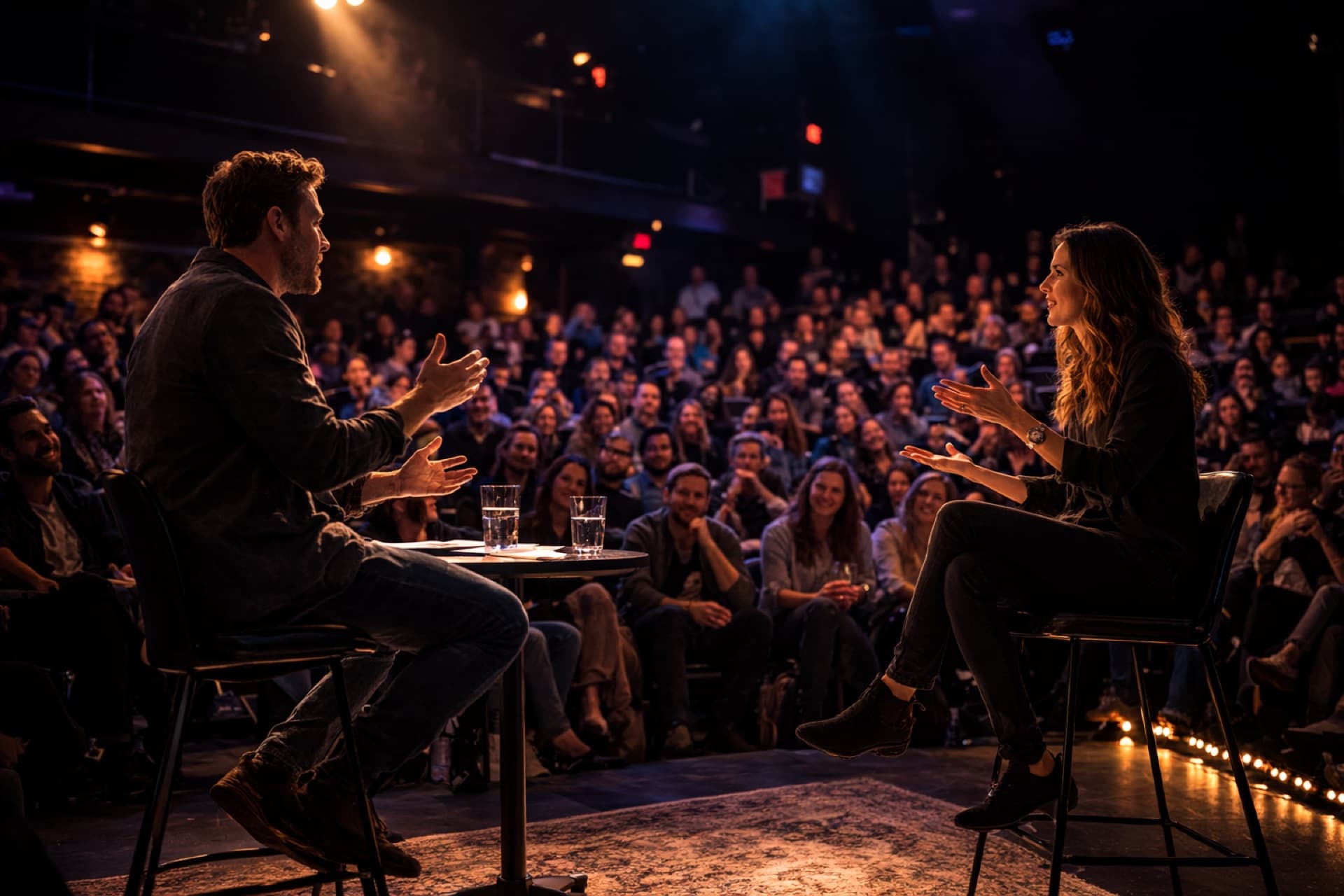
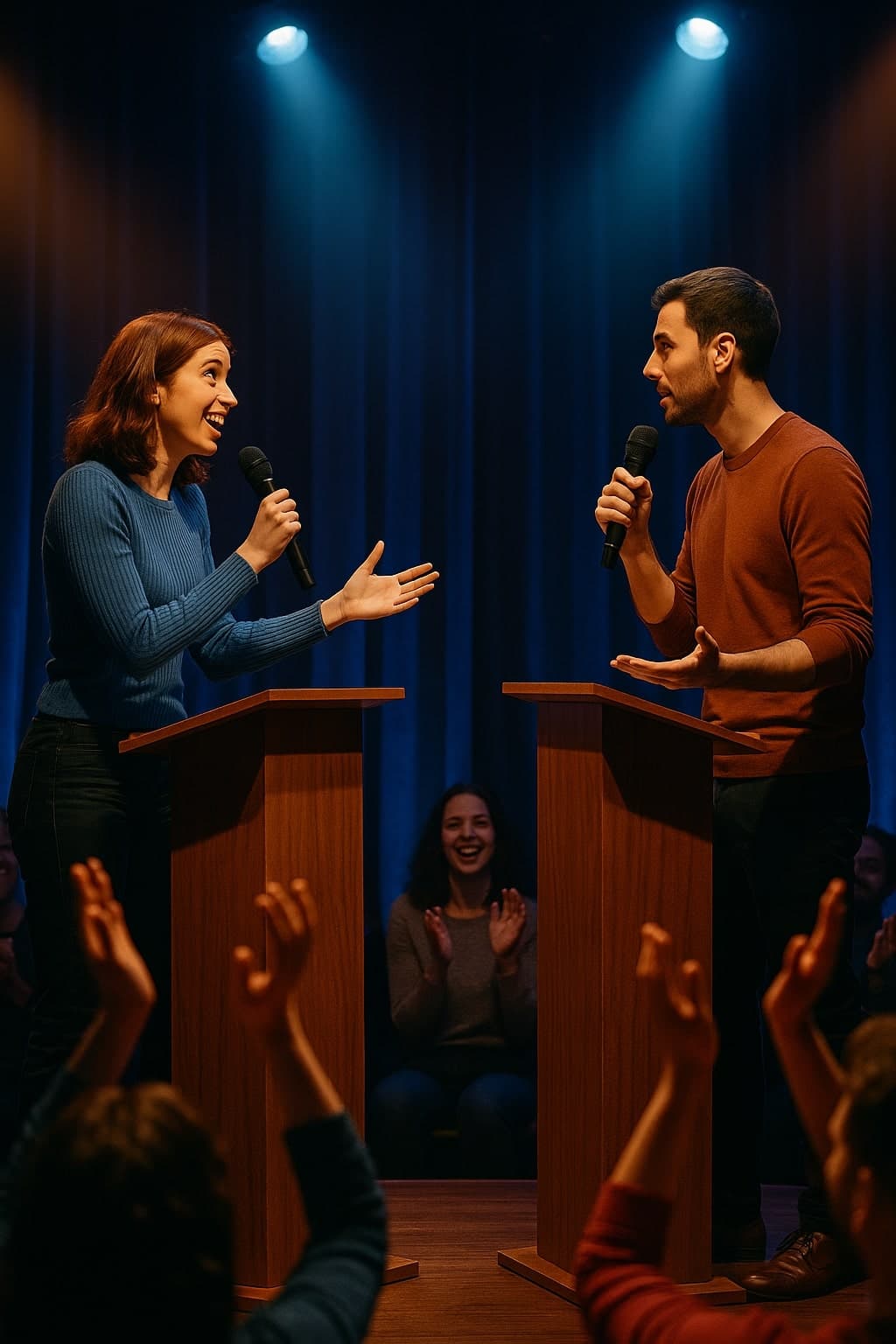
Real Disagreement,Up Close.
Social media rewards heat. Live debate rewards substance. We build the rooms — in cities everywhere.
Nobody Knows How to Argue Anymore
We've never been more connected and more divided at the same time. The tools designed to bring us together reward outrage, not thinking.
Echo Chambers
Social media algorithms trap us in bubbles where we only hear views we already agree with.
Dehumanization
Online, our opponents become avatars and caricatures. We forget they're real people.
Outrage Over Understanding
Hot takes get clicks. Nuance doesn't. The incentives reward volume over thinking.
Lost Skills
We've forgotten how to disagree well. Schools don't teach it. Nobody practices it. Society pays.
How Live Debate Changes People
There's something about being in a room with someone you disagree with — making your case, hearing theirs, shaking hands after. It builds the kind of understanding that no algorithm or comment section ever will.
You Argue in Person
When you argue with someone standing three feet away, they stop being 'the other side' and become a person. Eye contact changes everything.
The Format Does the Work
Time limits force you to listen. Scoring rewards arguments, not volume. The rules make civility the default.
You Argue Both Sides
Switchside means you don't get to choose your position. When you have to argue for something you disagree with, you actually start to understand it.
Opponents Become Friends
You shake hands after. You grab drinks. The person who just destroyed your argument buys you a beer. That's how it works.
How Debaters Change
The shift happens gradually, then all at once. People who show up regularly start thinking differently — not just about the topics, but about the people on the other side.
"The other side is crazy"
"I understand why they think that way"
"I'd never talk to someone who believes X"
"My debate partner believes X and they're one of my best friends"
"I can't explain my position under pressure"
"I can articulate my views clearly in any room"
"People who disagree are ignorant"
"People who disagree often have valid concerns I hadn't considered"
The Ripple Effect
What people learn in the debate room doesn't stay there. It changes how they talk to coworkers, how they listen to family, how they engage with their community.
Better Citizens
Democracy requires people who can argue against ideas without attacking people. Every debater becomes a better voter, juror, and neighbor.
- More informed decision-making
- Harder to manipulate
- Actually shows up and participates
Better Conversations
Debaters report changes in everyday conversations — at dinner tables, in meetings, and especially online.
- Actually listens before responding
- Says what they mean clearly
- Disagrees without burning bridges
Better Relationships
The ability to disagree without destroying a relationship is rare. Debate makes it second nature.
- Fewer unnecessary fights
- Understands people they disagree with
- Friends across ideological lines
"I coached debate on the south side of Chicago. Kids who had nothing discovered they could own a room with their words. That kind of transformation doesn't stop after graduation — it just has nowhere to go. Until now."
— John Thomas Connor, Founder
This Starts in a Room
Every club creates a little more understanding. Every debate night builds a little more community. Come to one event. If the energy in the room doesn't hook you, no hard feelings.